

 nubes
nubes
Archaeologists find 50,000 objects in Teotihuacán pyramid
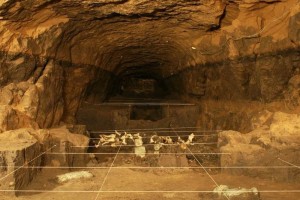
The Tlalocan project started five years ago and was funded by the National Institute of Anthropology and History of Mexico (INAH). (Photo: Courtesy INAH )
Archaeologists found
around 50,000 objects in a tunnel inside the Temple of the Feathered Snake in
Teotihuacán, an enigmatic city that flourished between the second and the fifth century of our era 50 kilometers (31 miles) northeast of Mexico
City.
Objects such as batons,
offerings, seeds, animal skeletons that could be jaguars and metal spheres have
been found in a 150-meter-long tunnel (492 feet) inside the Quetzalcóatl Pyramid, the third largest in the archaeological site.
The Tlalocan project (which
means 'I walk under the Earth' in Náhuatl), started five years ago and was
funded by the National Institute of Anthropology and History of Mexico (INAH).
"It's amazing,"
said Sergio Gómez, the Mexican archeologist in charge of the excavation at the
"City of the Gods", the first major Mesoamerican metropolis.
The temperature drops as you
descend and moisture increases. Wooden boards preserve the muddy tunnel floor.
"They wanted to recreate the outside world, so they excavated until they hit the phreatic zone in order to have rivers," Gómez explained.
Near the entrance, a sort of
chimney connects to the outside, perhaps an observatory, says the
archaeologist about the structure, that sank by accident in 2003 and helped
Gómez and French archaeologist Julie Gazzola find the tunnel.
The ceiling of the tunnel, which remained untouched for 1,800 years, is
"painted" with metal powder, pyrite or magnetite, that was probably
brought from another place because the material is not available in the area.
Over 300 spheres, with a diameter from 2 to 25 centimeters (0.7 to 9.8 inches), were found
inside two chambers.
"We still do not know
what they symbolize. The sea? Raindrops?" Gómez wondered.
At a press conference, Gómez
said that rubber balls, sculptures, jade and wooden pieces, ceramic objects, seashells and marine
elements from the Gulf of Mexico and the Caribbean Sea were also found inside
the pyramid.


 SIGUENOS EN:



